
The Arctic Ocean is dramatically changing as a result of climate warming. One of the key processes that is driving changes in conditions, particularly in the Eurasian Arctic, is an increase in the temperature and volume of Atlantic water flowing northward.
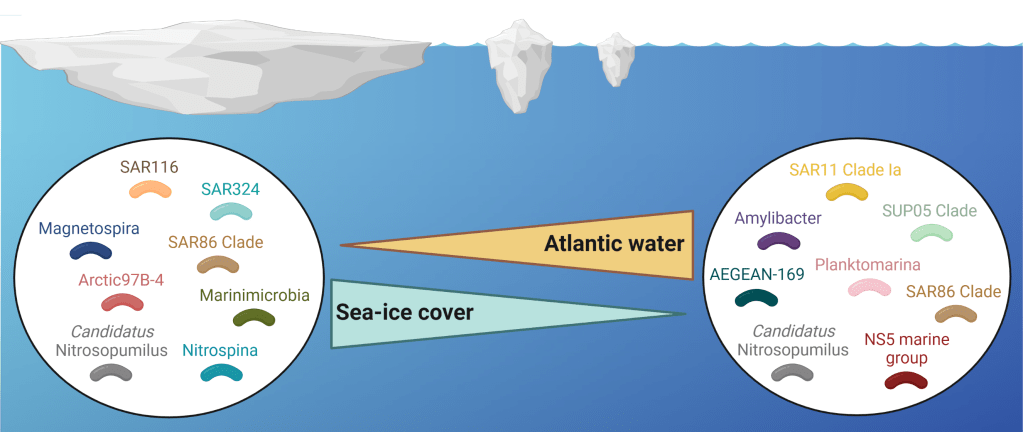
The expanding influence of Atlantic water, termed “Atlantification”, has been linked to accelerated rates of sea-ice decline, an increase in nutrient availability and an increase in heat transport, which can affect water column stability and vertical mixing.
Despite the unprecedented perturbations taking place, we know very little about how the changes in conditions will impact microbial communities. In part, this is linked to difficulties with sampling the Arctic Ocean.
Therefore, we set out to analyse bacterial communities over a multi-year timescale at the interface of the Arctic and Atlantic Oceans. By using automated sampling devices and combining our data with that previously published from the Arctic, we provide some of the first key insights into differences in bacterial communities across the full spectrum of conditions that occur, from high-ice to low-ice cover, polar night to polar day and polar water masses to water masses heavily influenced by Atlantic water.
 Taylor Priest
Leave a comment